

GRIPS presents a new educational model for producing leader of leaders
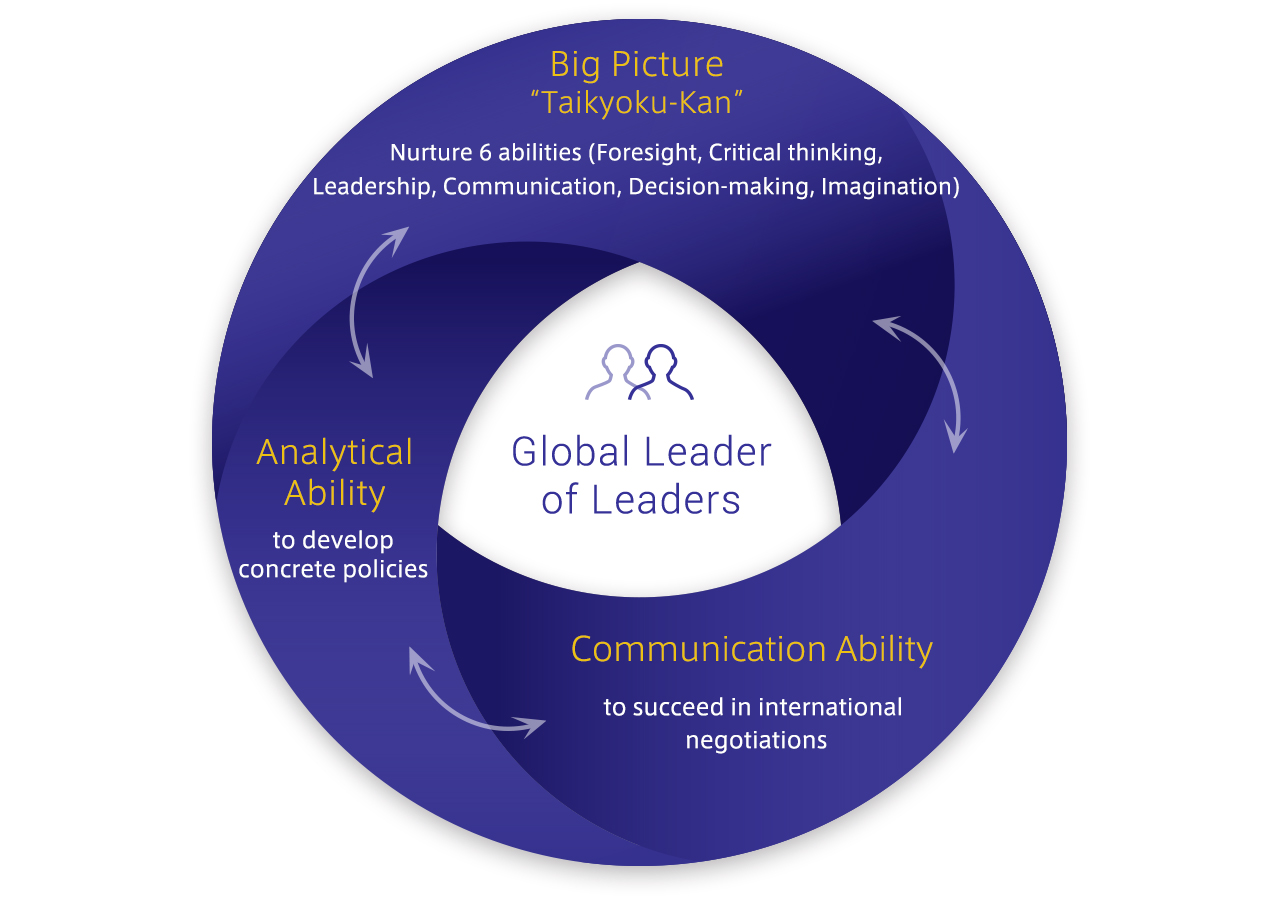
Through the G-cube program, GRIPS aims to produce a new type of leaders for government, business, and international arenas. The program will equip its participants with (1) a broad historical perspective, which will help them understand the true nature of policy issues and predict their overall impact, (2) strong analytical ability needed to develop insightful and effective policies, and (3) effective communication skills to convey ideas and opinions across languages, cultures, religions, and nationalities
 Small-group tutorials are compulsory for this program
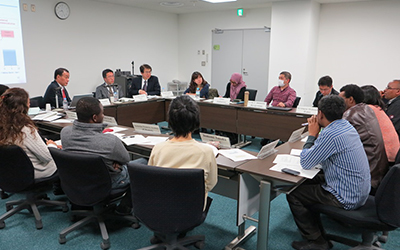
A tutorial is an intensive, interactive teaching style where one professor is assigned to a small group of two to five students. Participants in the tutorial deepen their knowledge on the specific theme through discussions and presentations. Through analysis, counterarguments, criticism and intensive discussions with one another, as well as with the professor, students acquire
in-depth knowledge of various individual policy issues and strong analytical skills. In addition to the discussions, importance is placed on writing, thinking, predicting, and communicating, which are required to establish and nourish a broader perspective.
Executive Seminar
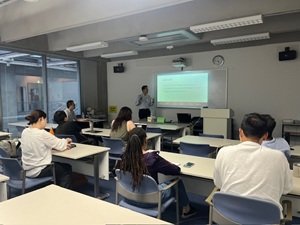
"Executive Seminar" is one of the courses in the G-cube program, where we offer students a valuable opportunity to directly engage with national and international leaders at the forefront of various fields,
including politics, business, and academia. Through dialogue and Q&A sessions with the prominent leaders, students gain practical insights into decision-making process as a leader in real-world settings.
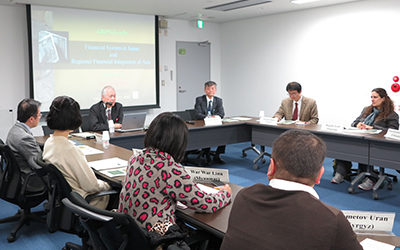
It is also planned to implement group work to foster a broad perspective on six essential competencies: Foresight, Critical Thinking, Leadership, Communication, Decision-making, and Imagination.
Through this course, students are expected to not only deepen their knowledge but also cultivate their own visions as a future leader.
Round 1
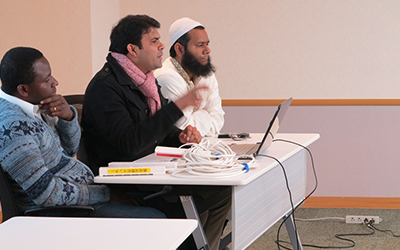
Students argued their groups’ points in Round 1
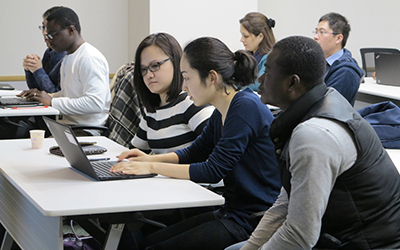
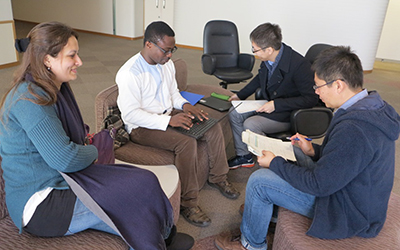
Strategizing: what points can be conceded?
Round 2
Round 2 begins
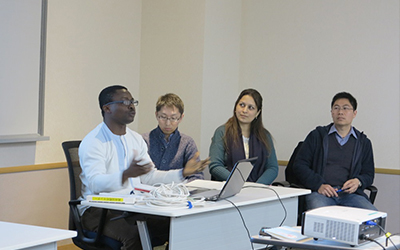
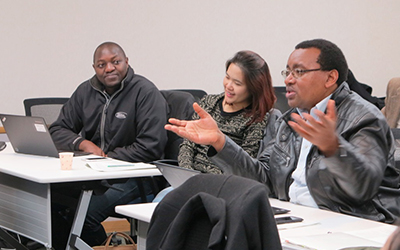
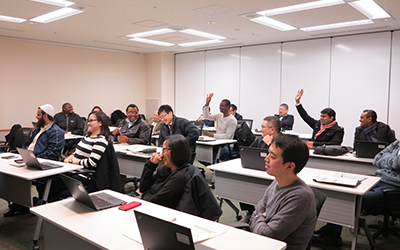
The “press” become good at making tough questions, and the discussion heats up
What the students say
“The G-cube Executive Seminar is an example of the usage of interdisciplinary approach in formulating policies and solving the challenges of our time. Our last Seminar thoroughly discussed the issue of accountability and corruption (which often plague developing countries), through the academic, practitioners, business, civil society and bureaucratic lenses.”
“I mostly enjoyed the 360 degrees perspectives and the pragmatic discussion held throughout the Seminar, given the various nationality, professional background and rich experiences of the participants. The Seminar also provided an opportunity to hone my analytical ability and practical skills through the role playing session, mock press conference and multiparty negotiation.”
Tutorial
A tutorial is an intensive, interactive teaching style where one professor is assigned to a small group of two to five students. Participants in the tutorial deepen their knowledge on the specific theme through discussions and presentations. Through analysis, counterarguments, criticism and intensive discussions with one another, as well as with the professor, students acquire in-depth knowledge of various individual policy issues and strong analytical skills.
In addition to the discussions, importance is placed on writing, thinking, predicting, and communicating, which are required to establish and nourish a broader perspective.
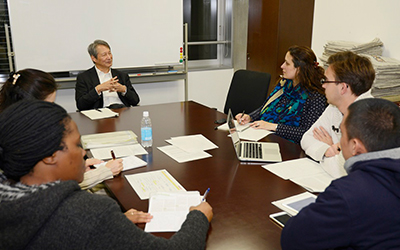
Since the classes are small, the distance between professor and students is very close. It is tough for the students, but also stimulating. The tutorials are very popular so that students from other programs sometimes ask if it they can sit in.
What the students say
In my tutorial, participants are expected to read journal articles proposed by students and submit a summary in order to prepare a discussion during the class. Discussion topics are varied. In addition to studying and understanding the contents of the papers in depth, we discuss on how to improve the articles and/or how to apply them to actual policy making (policy implication). It is very challenging because different opinions are expressed, and students are always expected to actively participate in the discussion. Your efforts are rewarded in terms of rich learning, so this is one of my favorite classes.”
“The tutorials offered at GRIPS have been very useful for me as these have broadened my horizon and have geared my research in the right direction. Most attractive feature of tutorials is that they are specially tailored and carefully designed according to the academic requirements of the participating students. The learned professors give students opportunity to discuss their minds freely and openly which becomes a unique learning experience. Because of discussions in tutorial sessions, I have been able to think objectively and grand-strategically about varying situations countries and institutions face on regional and international level.”
Special Lectures
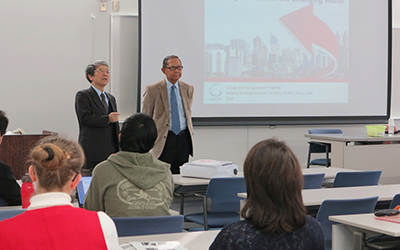
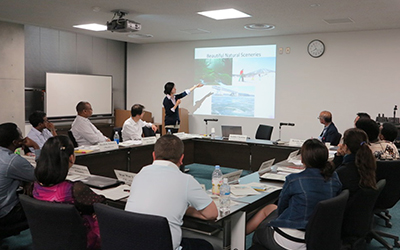
We invite distinguished lecturers from within and outside of Japan, leaders in various fields and specialists who have been involved in policy-making. They deliver lectures with relevancy to current problems based on their own experiences, sharing their personal experiences with our students.
Here are some of the lecturers we have invited in the past:
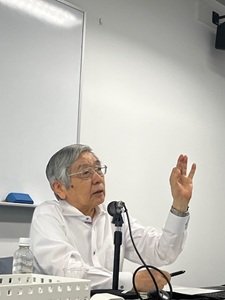
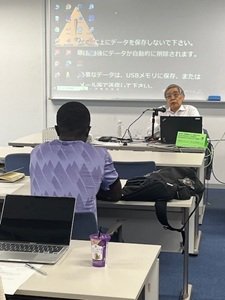
-Prof. Haruhiko Kuroda, GRIPS Alliance Senior Fellow (Former Governor of the Bank of Japan) (Executive Seminar Special Lecture)
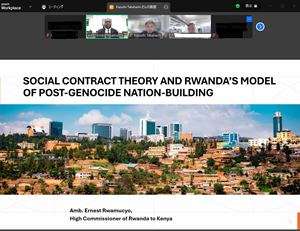
-H.E. Ernest Rwamucho, Rwanda’s High Commissioner to Kenya, Former Ambassador of Rwanda to Japan (Executive Seminar Special Lecture)
-Mr. Satryo Brojonegoro, Former Minister of Higher Education, Science, and Technology, Indonesia (Executive Seminar Special Lecture)
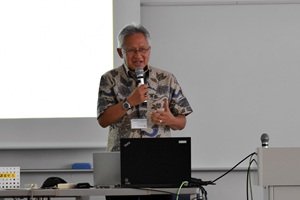
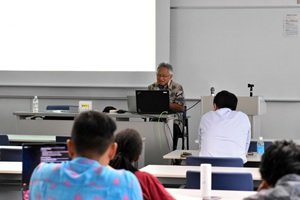
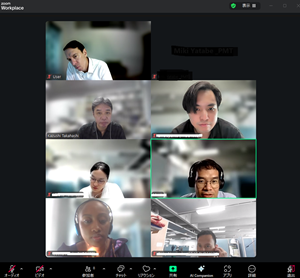
-Mr. Julio BACIO TERRACINO, Former Head of the Anti-Corruption and Integrity in Government Division at the OECD
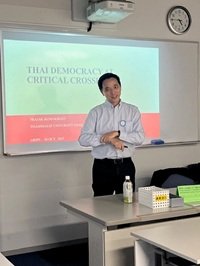
-Prof. Prajak Kongkirati, Associate Professor Thammasat University
-Prof. Peter J. Katzenstein, Walter S Carpenter, Jr. Professor of International Studies, Cornell University
-Prof. Ginandjar Kartasasmita, Former Member of the Advisory Council of the President of the Republic of Indonesia; Former Coordinating Minister for Economic Affairs, Finance and Industry
-Prof. Thanong Bidaya, Former Minister of Finance of the Kingdom of Thailand
-Mr. Hideto Nakahara, Member of the Board, Senior Executive Vice President,
-Global Strategy & Business Development, Mitsubishi Corporation
-Mr. Masahiro Sakane, Councilor of Komatsu
-Mr. Hiroshi Watanabe, Governor of the Japan Bank for International Cooperation, Former Vice Minister of Finance for International Affairs
-Mr. Kazuhiro Maruyama, Chairman, Toray Medical Co., Ltd., Former Executive Director of Toray Industries Inc.
-Mr. Masaki Ogata, Vice-Chairman, East Japan Railway Co.
-Mr. Junichi Namiki, Woodside Energy Australia Asia Holdings Pte. Ltd. Senior Asia Advisor, Former Director of Tokyo Gas Co.,Ltd
-Mr. Yoshiki Chishima, Board, Takane Gakuen, Former President of International In-Flight Catering Co., Ltd., Japan Airlines
-Mr. Kiyoshi Yoshida, Board, Japan Science Foundation, Former Executive Director of Hitachi Ltd.
and others…
What the students say
“The lecture was very useful especially on the importance of management in the organization”
“All the lectures were useful and provided a great opportunity to interact with top-notch professionals from relevant sectors in Japan”
“I might try to look also into the involvement of the corporate sector for my dissertation after this presentation”