|
|
Prof. K. Ohno's Homepage
Updated July 29, 2022 GRIPS Office: E410 Profile |
|


|
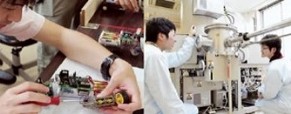
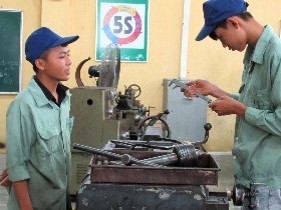
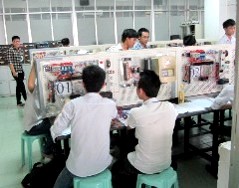
Kosen is Japan's technical vocational & education system established in 1961. It offers a five-year program to students aged 15 to 19 combining general and specialized courses. Kosen not only teaches theories and technical skills but also inculcates proper mindset, creativity, problem- solving attitude, and communication skills. Factory visits, firm internship, and graduation studies are essential ingredients of kosen education
|
Lectures
Policy Design and Implementation in Developing
Countries Class is completed for 2022.
syllabus grading student presentations
Economic Development of Japan
- - - - - - - - - - - - - - - - - - - - - - - - - - - - Below are additional materials prepared to answer students' questions in past classes - Evolution
of postwar SME policy |
|
Industrial studies & reports
Technology transfer of Meiji
Japan (Uchida)
Mission reports on industrial policy quality |
|
|
esearch Topics 2005 06 07 08 09 10 11 12 13 14&15 16&17
I have been working with two GRIPS PhD alumni to produce national productivity reports in Ethiopia and Vietnam. Dr. Kidanemariam Berhe Hailu is lead researcher at Policy Studies Institute (Addis Ababa) and Dr. Nguyen Duc Thanh is president of Viet Nam Center for Economic and Strategic Studies (Hanoi). They both got studied under my supervision. Though the two countries are at different development stages and face different problems, they both need analytical and reliable information on productivity for policy making. To ensure high-quality research, I advised their data collection and cleaning, labor productivity decomposition, shift-share analysis, firm survey, etc. Interim results were presented to high-level national audience as well as at the World Bank headquarters, and received positive responses. The Ethiopian report was completed in 2020 and the Vietnamese report was launched in April 2021. Ethiopia Productivity Report Vietnam Productivity Report
GDF interviewed Japanese auto makers, visited many developing countries that produce cars, analyzed auto tariff structures globally, and carefully compared the policies of Kenya and Ethiopia to come up with pragmatic policy advice to invite global car giants to Ethiopia. The results were reported to Ethiopian leaders and industrial officials, and recommendations will be followed up with action. In Ethiopia, barriers that need to be overcome are (i) foreign currency shortage; (ii) incentive problems; (iIi) used car import; and (iv) small demand. slides
Izumi & Kenichi Ohno contributed a chapter to the recently released Oxford Handbook of the Ethiopian Economy (OUP 2019). We explained how Ethiopia has learned from East Asia, especially Japan, and how GRIPS and JICA have conducted bilateral industrial policy dialogue since 2008. The GRIPS Development Forum has exchanged many policy issues with PM Meles (2008-12) and PM Hailemariam (2013-17). We are re-establishing working relations with the new policy teams of PM Abiy Ahmed who came to power in April 2018, to continue Japan's industrial cooperation. book website
Ethiopia and Vietnam are two countries with which GRIPS Development Forum (GDF) conduct intensive policy research & dialogue. Despite their different level and pattern of development, both now focus on productivity and GDF is deeply involved in it. In both, GDF works very closely with the Japanese embassy, JICA and policy research institutions. We work with high levels (PM, PM Office, ministers) as well as relevant ministries and implementing agencies. In Ethiopia, JICA-supported Kaizen programs are now nationally owned and strongly expanding. In Vietnam, productivity concern is widely talked about but real action is slower than in Ethiopia. We mobilize researchers who received PhD from GRIPS under K. Ohno's supervision--Dr. Nguyen Duc Thanh (director, Vietnam Economic Policy Research, Vietnam National University; former PM advisory member) and Dr. Kidanemariam Berhe Hailu (Lead Researcher, Policy Study and Research Center under federal government). GDF is currently working with them to produce a policy-oriented Productivity Report in each country. |
|
 Kosen (June 2022)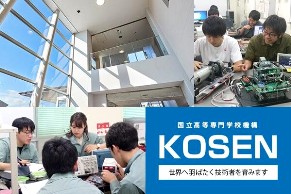



 We
visited Myanmar to study its industrial policy methods, especially
automotive and SEZ policies. Myanmar has poor infrastructure and current
policy capability is low, but it seriously listens to and accepts
foreign advice (including Japanese). Japanese car makers requested
restriction of used car imports, and Myanmar did it. They also
participated in drafting Myanmar's first automotive policy. As a result,
new car sales rose dramatically. Toyota is now building a new assembly
plant (photo) and Suzuki is expanding its existing plant. Even
though Myanmar's automotive sector is at an early stage of SKD (simple
assembly), it wants to go to CKD (assembly with welding & painting) and
component supplier development in the future. Myanmar also permitted
Japan to build and run Thilawa SEZ by Japanese standard in both hard
infrastructure and customer service. It is now fully occupied and
expanding.
We
visited Myanmar to study its industrial policy methods, especially
automotive and SEZ policies. Myanmar has poor infrastructure and current
policy capability is low, but it seriously listens to and accepts
foreign advice (including Japanese). Japanese car makers requested
restriction of used car imports, and Myanmar did it. They also
participated in drafting Myanmar's first automotive policy. As a result,
new car sales rose dramatically. Toyota is now building a new assembly
plant (photo) and Suzuki is expanding its existing plant. Even
though Myanmar's automotive sector is at an early stage of SKD (simple
assembly), it wants to go to CKD (assembly with welding & painting) and
component supplier development in the future. Myanmar also permitted
Japan to build and run Thilawa SEZ by Japanese standard in both hard
infrastructure and customer service. It is now fully occupied and
expanding. 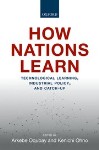 Kenichi Ohno and Arkebe Oqubay, an Ethiopian
minister at PM Office, published an edited volume, How Nations Learn:
Technology Learning, Industrial Policy and Catch-up (OUP, June 2019).
Renowned researchers examine key features of successful industrialization,
state's role in catch-up and innovation, and cases from Asia, Africa and
Latin America with particular emphasis on HOW policies are made and
executed, not just WHAT are done. This book is another offshoot from the
Ethiopia-Japan Industrial Policy Dialogue.
Kenichi Ohno and Arkebe Oqubay, an Ethiopian
minister at PM Office, published an edited volume, How Nations Learn:
Technology Learning, Industrial Policy and Catch-up (OUP, June 2019).
Renowned researchers examine key features of successful industrialization,
state's role in catch-up and innovation, and cases from Asia, Africa and
Latin America with particular emphasis on HOW policies are made and
executed, not just WHAT are done. This book is another offshoot from the
Ethiopia-Japan Industrial Policy Dialogue.